Just received a John A Maxwell
Instruments- discuss specific features, luthiers, instrument problems & questions
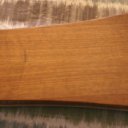
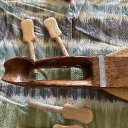
Pictures of the back, not a scratch and really shines, and a finished sound hole with a minimal outline.
Pictures of the back, not a scratch and really shines, and a finished sound hole with a minimal outline.
I wonder if I could make one out of modeling clay? Actually the pegs after reconditioning are holding well and the variation is within 10 cents.
That's a great description of both the design and function of these things, @ken-longfield.
@nathina, since you don't have a model to copy as Ken did, you might make a prototype out of some material that is easy to mold and re-mold. Then when you get the precise design of something that should work, make final versions out of ebony or some hard wood.
I replaced a "bead" on a Sunhearth dulcimer I purchased. The original probably broke and was replaced with a black Lego brick. I cut a new one out of some scrap ebony I had. It matches the other three originals quite well. It is not round like a bead, but is more trapezoidal in shape. There is small hole drilled through it longitudinally for the string to pass through. This bead slides between the saddle and tail to adjust the tension on the string to sharpen or flatten it.
Ken
"The dulcimer sings a sweet song."
Nathina, a small number of luthiers used fine tuning beads on their dulcimers. One was Keith Young. Here is a discussion of someone replacing a missing one. You can see that they require no serious modification of the instrument yet make those friction tuners a lot easier to use. I think I remember a couple of other discussions here about fine tuners. If I can dig them up I'll edit this comment and add the links.
Nathina, a small number of luthiers used fine tuning beads on their dulcimers. One was Keith Young. Here is a discussion of someone replacing a missing one. You can see that they require no serious modification of the instrument at all yet make those friction tuners a lot easier to use. I think I remember a couple of other discussions here about fine tuners. If I can dig them up I'll edit this comment and add the links.
EDIT:
Here's another discussion about fine tuner beads .
And here's another in which I share a picture of an autoharp my uncle made with metal fine tuners for each string. It was a prototype and we joked that it looks like the autoharp has braces. On his new builds he puts a nice piece of wood on a swivel that covers the fine tuners.
I have seen the beads but I am not familiar with what they do. Where are they obtained, or are they just "beads"?
googling "dulcimer fine tuning beads" yields THIS .
I have seen the beads but I am not familiar with what they do. Where are they obtained, or are they just "beads"?
googling "dulcimer fine tuning beads" yields THIS .
I agree, Ken.
I think you meant "Peg Drops" and behind the bridge, not the nut...right? ;)
Warning- biased opinion ahead!:
I'm a big advocate of keeping vintage/antique collector dulcimers in original configuration. There is not an unlimited supply of antique dulcimers, and some we think of as not terribly valuable today might be precious and rare 30 years from now. Whatever your personal preferences, it is true that any collectable dulcimer will be diminished in value if you remove its wooden pegs and replace with geared. Or add extra frets, etc. I usually just suggest that if one wants geared tuners (and most folks do..they are convenient!) one should just buy a more modern dulcimer that has them already rather than alter an antique.
I have seen the beads but I am not familiar with what they do. Where are they obtained, or are they just "beads"?
Just finishing off the head. Just need to polish. This is the peg paste I use.
There won't be unnecessary changes unless they have to be made to make the unit playable. Museum style restoration, fixes the finish, removes dents and scratches, may recolor or change the stain if necessary. He used lucite nuts and bridges which stay. It will be the same instrument, only will like it was just made (I hope). This will be for resale. I was thinking about making it into a baritone which seem popular at the present, but will leave it as it is, unless it won't sell. Although it it turns out as i hope, I might not want to part with it.
very cool Nathina. I know I love to see the "before and after" photos of all kinds of job but especially musical instruments. I got some PERFECTION PLANETARY PEGS for the next one I'm going to make. you might like to research that in this site and elsewhere. aloha, irene
Like the others here have said, I would enjoy seeing photos of before and after. I can't tell if your goal is to resell the dulcimer or keep it for your own playing. If your goal is to resell the instrument, it will no longer be an historically correct John Maxwell dulcimer and will not be attractive to any collectors, but as a refurbished instrument for modern playing styles it might be attractive to some players.
Ken
"The dulcimer sings a sweet song."
I agree, Ken.
I think you meant "Peg Drops" and behind the bridge, not the nut...right? ;)
Warning- biased opinion ahead!:
I'm a big advocate of keeping vintage/antique collector dulcimers in original configuration. There is not an unlimited supply of antique dulcimers, and some we think of as not terribly valuable today might be precious and rare 30 years from now. Whatever your personal preferences, it is true that any collectable dulcimer will be diminished in value if you remove its wooden pegs and replace with geared. Or add extra frets, etc. I usually just suggest that if one wants geared tuners (and most folks do..they are convenient!) one should just buy a more modern dulcimer that has them already rather than alter an antique.
Nina, I'm excited for you- you GO girl! I look forward to a few pix later.
I'm convinced that sprouts that are truly fresh (grown at home) are a real powerhouse of healthy nutrients. 
Remember to keep them dark while growing, until the last day when you set the jar next to a bright window- so fun to see them get so GREEN within a few hours of being exposed to light!
yeah, I also do so much agree with what Dusty and Ken said here. It all depends on what you're going to use this dulcimer for. Keeping things original is wonderful for the collectors out there, even if it be you. Start preparing a wall or other fun ways to display your accumulating dulcimers. Keeping the history of where you got them and what you did to restore them to their glory. aloha, irene
I ordered lids for my mason jars and a variety of seeds. The lids came the day after I ordered them! The seeds came yesterday and I've started two jars--alfalfa and broccoli seeds. I've watched plenty of YouTubes so we'll see how the seeds sprout. I hope to post pictures once there is something to photograph. Nina
I agree with what Dusty said... unless you're going to make it yours, rather than 'flip' it, I would leave the tuning pegs alone and add simple fine tuner beads behind the nut if you can. If you don't have it, a couple drops of "Peg Dope" work wonders for making pegs work smoothly -- loosen the peg, put a couple drops where the peg fits into the scroll side, then re-tighten
That's definitely a cool project, Nathina. I second the motion to make sure you take some "before" pictures so we can see the work you do.
While it is true that few people today enjoy friction tuners, you might pause before replacing them with modern geared tuners. Once an instrument is "vintage" there is certainly an interest in maintaining it's original construction. Then again, if you want to play the instrument regularly, by all means make it your own. A compromise might be to install fine tuners behind the bridge if the design allows.
very cool Nathina. I know I love to see the "before and after" photos of all kinds of job but especially musical instruments. I got some PERFECTION PLANETARY PEGS for the next one I'm going to make. you might like to research that in this site and elsewhere. aloha, irene
Just received a John A Maxwell that I am refurbishing. So far peg holes are round and tapered. Strings are being replaced and laid properly. Never sure why somebody has to use the entire string length on the pegs. Pegs will be refinished. All dings fixed. And the action will be adjusted, way too high. Will be fixing its wooden case. By the time I am finished it will be museum quality refinishing and ready to go. Frets are now placed properly. This is a fat hour glass version 4 str. Ball Strings to be replaced This is walnut on walnut I think. Added strap buttons. I will post pics when finished.
I am wondering if I shouldn't change the pegs to starite tuners. What do you think? I seems that very few understand violin peg tuning.
Great post Dusty, I hope everyone will read it because every sentence in your post contains clear and correct information that sheds light on this whole subject. 
I see Terry sells string sets in 24/16/12 and 26/16/13. The 26/16/13 set may help but i wouldn't guarantee it.
What I suggest is dropping Terry a note and explaining to him what you've explained here. Rather than centering your strings on D, he may recommend buying strings ideal for the key of C; that way you'd be going up one step to D, and down only one step to B...
Ken, I normally play in the key of D, especially when I'm playing with my dulcimer club [which I hope to do again this spring or summer]. But when I'm playing by myself these days, I'm playing in C just as often. And the intonation problem is definitely worse when I tune to B than to C. Maybe I should go up to .26, 16., 14. Then perhaps I could play in D, C and B without noticeable lack of intonation as I go up the fretboard. I might give that a try.
I don't think I can answer the original question posed, but I am not sure there is a clear answer. You can tune a dulcimer however you want, but that doesn't mean that there is an official name for the tuning. The Canadian dulcimer player Rick Scott has written lots of tunes in strange tunings. He doesn't have names for them; he just tells you what notes he is tuned to.
There are basically two ways we name tunings. One is by the mode that is available on the melody string (assuming there are no half frets and the melody is played only on the melody string). In that nomenclature, we do not have a choice about the drone strings. They have to be the 1st and 5th notes of the scale, although they can be reversed. DAA is ionian and ADa would be a reverse ionian. DAC is aeolian and ADC would be reversed aeolian. What is reversed is simply the order of the drones. The tuning of the melody string has nothing to do with whether we call a tuning "reversed" or not.
The second way of naming a tuning is simply by labeling the strings according to their scale position. DAA is 155, as is GDD and so forth. DAC is 157, FAC is 135, etc.
(For what it's worth, I much prefer naming tunings according to scale position since it avoids the obfuscating modal names and is easier to transpose from one key to another. Additionally, since many of us have extra frets and fret across all the strings, we are not limited to a single mode in any given tuning, making the modal names technically incorrect and certainly misleading.)
So one way to label your tuning would be to establish the key and then determine the scale position of the strings. If @strumelia is correct, and you are playing Emma's Waltz in G aeolian (and the song is certainly in aeolian) then your Bb is the m3, the G is the 1, and the F is the 7. So we could say simply that you are tuned m3-1-7. But we cannot call that an aeolian tuning because the drones are wrong. I think perhaps the reason it sounds OK is that the minor third is one of the notes--and one of the defining notes--of the aeolian mode, so it sounds reasonable.
If you were to tune the bass string to D, so that you were in DGF, that would be a true reversed aeolian tuning.
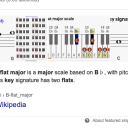
Here is Bflat Major and Bflat Minor. If you F string is more towards the F# then it is minor. Otherwise if it is F, then major.
Nice sprouts! I making dinner and would love a bunch of them NOW.
Just picked the last of my romaine lettuce from the field. I had them on raised beds covered with black plastic mulch so frost never got them. Cold weather really brings out the flavor... Robert
You said: "B flat / G / F (melody string is F)"
In listening to your sound clip of your open strings, you have lowest string (bass) at Bb. The middle string is tuned to the G above the melody string's F. Thus, the highest sounding open string is the middle string G.
The youtube you copied below is playing Emma's waltz with a capo at fret one, resulting in the minor-sounding aeolian mode. This is what I guessed before with your tuning. On your open F melody string, the first fret of your melody string will be your 'home'/tonic note which would be a G (matching your open middle string in G). If you aren't using a capo (without telling us), you'd be playing the waltz in the G aeolian scale, in Aeolian mode which has a lonesome/sad feel. From the internet: "G Aeolian is the sixth mode of the Bb major scale · G Aeolian Scale Notes: G A Bb C D Eb F". Your tonic/home note is G, on the 1st fret of the melody string.
The reason your melody string is the F note LOWER than the middle string (usually it's higher than the middle string) is because if you tried to tune it to next f note one octave higher, at a 28"+ vsl that string would break no matter how thin a gauge you had. So you went with the F an octave lower which happened to be one note below the middle string G.
Here is Bflat Major and Bflat Minor. If you F string is more towards the F# then it is minor. Otherwise if it is F, then major.
If you play a little snippet of an actual tune, a few measures, particularly the end... we could tell you what key and mode you are playing in, based on your tuning.
This is a pre fire 1983 one of his. I will see when it comes. He changed his style after the fire. Before the fire he used tuning pegs, after he went to mechanical. Once it comes I will get in touch. I also have information about his fire in 1983.
I am trying to understand your tuning. The melody string is tuned to F. The middle string is tuned to G, but is it higher or lower than the F. The bass string is tuned to B flat. Is this tuned lower than the F? I want to try tuning my dulcimer this way, but may need to change strings to do so.
Ken
"The dulcimer sings a sweet song."
I have never seen a dulcimer made by Jim Good with any painted designs on it. Are you sure this was not done after the dulcimer was purchased? When you look at the dulcimers on Jim's website, there are no dulcimers with painted designs. He doesn't mention that on the website. If it were something he offered, you would think it would be on the website. I can't wait to see your purchase.
Ken
"The dulcimer sings a sweet song."
Inversion of Gm7 according to https://www.scales-chords.com/chord/piano/Bbgf
Not sure he contracts with anyone to do paintings on his instruments. Contact him and ask.